
Following a chilly spring that hindered growth, the corn season in Prince Edward Island is finally on track — just as more affordable corn from Quebec begins to appear in supermarkets.
Matthew Compton, owner of Compton’s Farm Market in Summerside, noted that May and June temperatures were unusually low. Although this postponed the sweet corn harvest, he did not reduce his planting quantity.
“Corn does not thrive in cold soil,” he explained. “It requires warm soil and temperatures to develop properly.”
To ensure some of his crop would be ready sooner, Compton utilized clear, biodegradable plastic for part of his planting. This material acts like a greenhouse, warming the soil and promoting quicker germination and growth of the corn.
“We started selling on Monday,” he shared during an interview with CBC News on Thursday.
“The quality is outstanding, and the flavor is incredible. A bit of rain and warmth really makes a difference.”
-
Wheat and corn crops in Canada’s Prairies, U.S. Midwest could see biggest losses due to climate change
-
More P.E.I. growers picking corn as a ‘win-win’ crop
Nonetheless, Compton remarked that the main sweet corn crop in his fields is lagging slightly behind his preferred schedule.
Timing is crucial.
He pointed out that the demand for sweet corn peaks in mid-summer, particularly when tourists flock to the Island and families purchase corn for campfires and barbecues.
“We have a limited window for our sweet corn,” Compton stated. “The further into September it stretches, the demand diminishes.”

Compton mentions that he plants some of his sweet corn beneath a clear, biodegradable plastic made from corn to warm the soil for an earlier harvest. By this stage in the season, he says the plastic has decomposed so much that ‘you wouldn’t even know’ it was ever present in the field. (Matthew Compton)
On the opposite side of the Island, Mark Verleun and his wife operate Keddy’s Corn in Montague. He also noted the cold and wet spring.
“May and June were really cold, wet, and windy,” he remarked. “We planted corn that took 16 days to germinate, resulting in a slow start, but it’s progressing now.”
He mentioned that the weather finally improved around early July.

While an increase in corn may seem beneficial for corn enthusiasts, a surplus elsewhere could reduce profits for Island farmers this year. Matthew Compton from Compton’s Farm Market and Mark Verleun from Keddy’s Corn discuss the beginnings of the sweet corn season.
Verleun anticipates opening for the season early next week. He has planted corn to last until October 1, but the actual duration of the season will depend on the risk of fall frost.
Last year, Keddy’s managed to offer corn through Thanksgiving weekend, but an early severe frost this autumn could cut the season short, he warned.
Quebec corn puts pressure on local prices
Both farmers are closely monitoring the situation in Quebec.
After a slow start, farmers in Quebec are now harvesting more sweet corn than local markets can absorb, leading to lower prices for consumers. The corn from Quebec can be easily transported into the Maritimes.
Compton indicated that this could undermine local pricing.
“If there’s a surplus of corn in Quebec, it will eventually affect prices in the Maritimes,” he noted.
“This is excellent for consumers, providing them with a more affordable corn option. However, it puts us at risk of receiving lower prices for our corn.”
At his market, Compton has maintained last year’s pricing: $1 per cob, or 14 for $9.
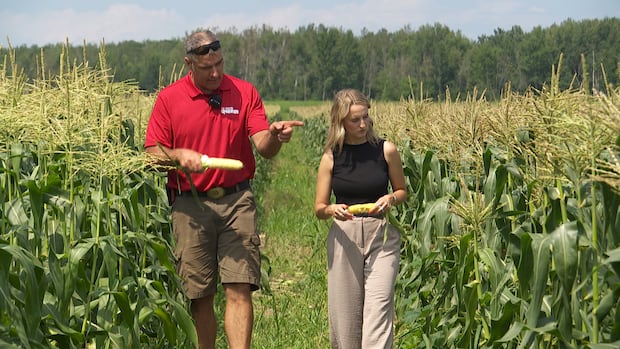
After a sluggish start to the season, Quebec farmers are now harvesting more sweet corn than the market can accommodate, resulting in lower prices for consumers. Despite tighter corn profit margins, farmers are enjoying a prosperous summer due to exceptional yields of other vegetables.
Verleun mentioned that Keddy’s has also kept its prices steady, having not raised them in four years.
“You definitely don’t want to price yourself out of the market,” he remarked.
Compton acknowledged that shoppers might be lured to opt for cheaper corn available in stores, yet he hopes that when possible, customers will choose to support local farmers by paying a bit more.
“If you can support your local farmer and pay a little extra for it … that money gets reinvested back into the local economy.”