
It’s quite unsettling to draw any comparison — particularly regarding the actor’s appearance — between Ted Kaczynski, the notorious ecoterrorist commonly referred to as the Unabomber, and Jacob Tremblay, the innocent-looking former child star known for feel-good films like Good Boys and Wonder.
However, there is more to consider here: We are discussing the portrayal of Kaczynski by the 19-year-old Canadian in the Netflix film Unabomber, which premiered on Friday.
Yet, it still seems rather inappropriate to suggest that there’s any significant parallel between the two. This is precisely why it is unexpected when Tremblay himself makes a somewhat similar assertion during a promotional video call for the film.
“I found it challenging to connect with Ted for the most part. But once I arrived on set — the script is crafted so beautifully, you can truly empathize with this guy,” he shares.

From Room to his role as Ted Kaczynski in Unabomber, Jacob Tremblay reflects on his growth as an actor, the challenges of being the youngest in the environment, and the film’s crucial message about the importance of nurturing children.
This is indeed a remarkable notion. Despite acknowledging the horrific and unjustifiable actions Kaczynski committed later in life, Tremblay consistently refers back to his struggle to resist finding some common ground with him.
“What resonated with me, and what I held onto,” he explains, “was the experience of being the youngest person in the room.”
He alludes to the bizarre origins of Kaczynski’s story — the primary focus of the Janus Metz-directed film. A mathematical genius, the Chicago native reached academic heights at Harvard University at just 16.
Through this early admission, he became, at that time, the youngest assistant professor at the University of California, Berkeley (where he would later plant bombs two decades later).
“In this industry, I often find myself being the youngest one present,” Tremblay notes. “So I can relate to that feeling of awkwardness and not quite fitting in.”
Larger background
Of course, the subject matter delves deeper. While at Harvard, Kaczynski found himself entangled in one of the most peculiar historical events of the past century.
Chosen as a vulnerable participant in what many speculate was part of the CIA’s clandestine MK-Ultra mind-control program, psychologist Henry Murray encouraged the budding theories of the young math prodigy while boosting his fragile self-esteem.
He then had Kaczynski restrained in a chair, connected to electrodes, and subjected him to critiques that were, in Murray’s own words, “vehement, sweeping, and personally abusive,” designed to dismantle him.
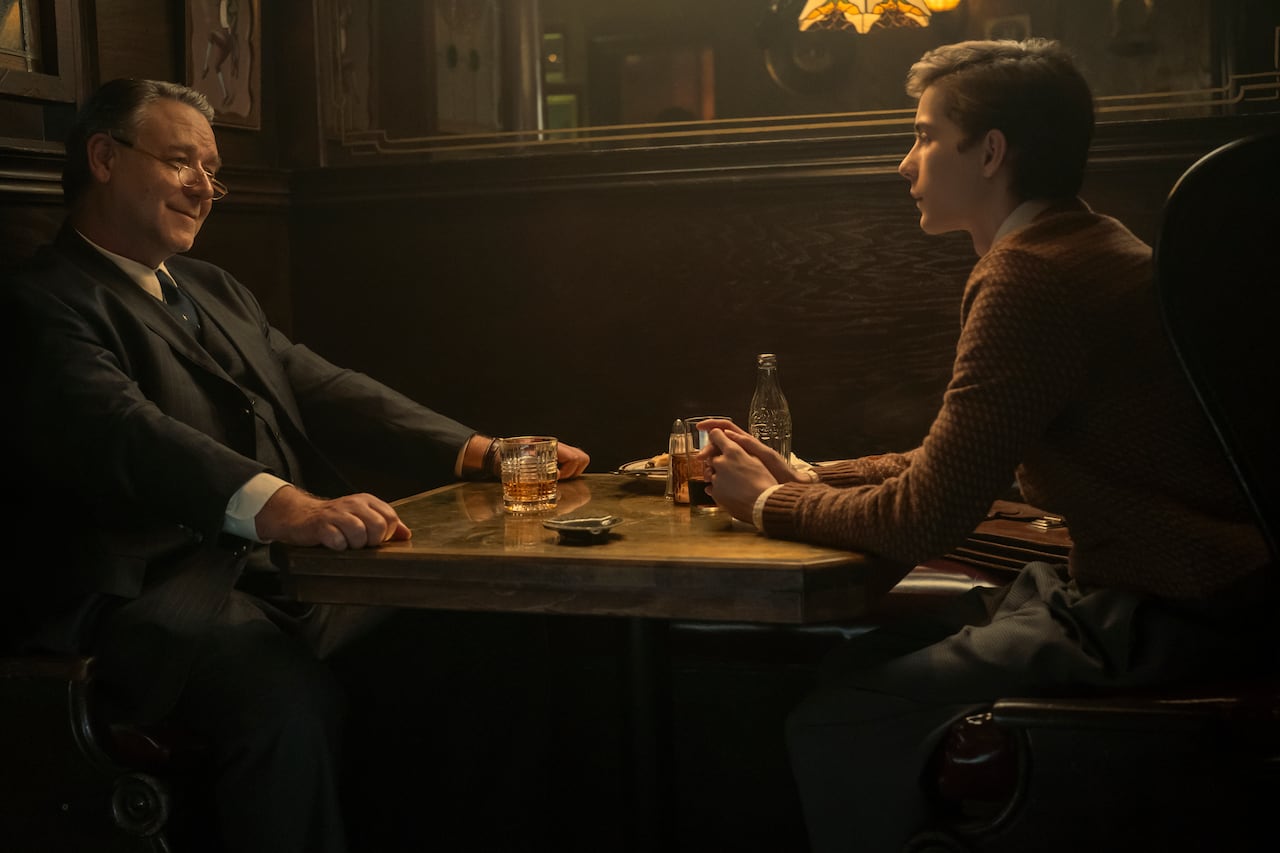
Russell Crowe, left, plays Henry Murray alongside Jacob Tremblay as Ted Kaczynski in Unabomber. (Philippe Bosse/Netflix)
In the film, the objective is to win the Cold War. If the United States can learn to break young men’s minds, they could theoretically apply that knowledge to capture enemy soldiers. And if the aim is to discover how to dismantle a person’s self-worth, who better to target than a gifted, insecure child?
The resulting portrayal of villainy on screen is a departure for Tremblay, who describes it as an enjoyable shift. He states that his filmography reflects his aspiration to avoid portraying the same character repeatedly while exploring various genres.
Yet, this role stands out with its personal connection. If one is to believe certain sources, that was Kaczynski’s rosebud, despite his long denial of the impact those sessions had on him. According to the film, they represent a severe betrayal of the societal responsibility to protect children — culminating in a man who would go on to send lethal letter-bombs to prominent figures for decades.
-
REVIEW
Robert Pattinson’s Primetime hates Chris Hansen
-
Clement Virgo says Steal Away is his most ambitious work yet
Considering that this role follows closely after Tremblay’s portrayal of a boy coerced into armed rebellion against the federal government in Sovereign, the trend is hard to overlook. He describes the theme of “a young, impressionable mind, driven by trauma to commit violent acts” as a central message of Unabomber.
“It’s crucial to treat children with love and to instill in them a sense of their worth,” he emphasizes. “Conversely, if a child is not loved adequately, it can lead to harm and incite violence. It truly does.”
This comes at a time when the industry he grew up in is facing another moment of introspection. In light of former child actor Hayden Panettiere’s overdose death earlier this year, Canadian actress Alison Pill penned a New York Times op-ed critiquing child acting as “extractive, exploitative, and nonconsensual,” suggesting it should be entirely banned.
Nicky, Ricky, Dicky & Dawn‘s Casey Simpson, among others, opposed such a ban — but stated that thrusting a child into stardom almost guarantees they will later feel like a failure, irrespective of their adult achievements.
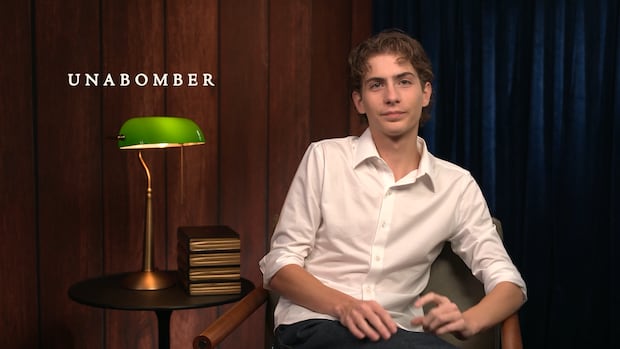
Beyond acting, Jacob Tremblay expresses his profound love for the collaborative aspect of being on set and his dedication to learning the art of storytelling from behind the camera.
Tremblay does not explicitly make this comparison. From his earliest memories, he recalls a deep fascination with acting: After landing his first role in Smurfs 2 at the age of five, he remembers his mother questioning whether this was something he wanted to pursue. Not only did he affirm this — he said he couldn’t envision doing anything else.
That sentiment has persisted. After briefly entertaining the notion of attending film school, director Mike Flanagan advised him to immerse himself on set to nurture his growing interest in writing and directing.
Nevertheless, even though his path to acting seemed obvious, determining whether he actively chose it is a more complex question.
“It’s challenging to say, ‘Well, I really wanted to do this when I was five years old,’” he reflects. “Because I’m sure I didn’t fully grasp what it meant to be an actor or to work in film at that age.”
-
Q with Tom Power
Jacob Tremblay on child stardom, The Little Mermaid and Justin Bieber
-
Child actor Jacob Tremblay hopes Hollywood bites on his zombie script
This leads to a challenging comparison: Kaczynski, the young man thrust into an excessively high position too early, ultimately faced destruction. Is there any similarity to Tremblay’s experiences — rising to fame with his role in Room at just eight years old — even if he lacked understanding of what he was embarking on?
“You certainly try to find those parallels. I can only imagine how different my life would be without this career. It’s hard to fathom, honestly.”
“It makes me sympathize with someone like Ted, who displayed immense talent from a young age and had so much potential,” he adds.
“I genuinely hope that audiences watching this film will reflect on this — about talented individuals and how they can uplift and support them in life, rather than exploit them.”